

Modern cars do a lot more watching than most of us realise. Lane assist gently steering you back between the white lines, automatic braking reacting before your foot reaches the pedal, cruise control adjusting itself to the car in front. It all happens quietly in the background, powered by cameras and sensors that you probably never think about until something goes wrong.
Those systems only work properly if they are pointing in exactly the right direction, and we do mean exactly. We are talking about tolerances measured in millimetres and fractions of a degree.
So, what is ADAS calibration? In simple terms, it is the process of realigning your vehicle’s cameras and sensors so they read the road accurately again after something has moved them. A collision repair, a windscreen replacement, new suspension springs or even a wheel alignment can all be enough to knock them out.
It is one of the most misunderstood parts of modern vehicle repair, and one of the most important. A car can look perfectly repaired, drive completely normally and show no warning lights whatsoever, while its safety systems are quietly measuring the world from the wrong angle.
Here is everything you need to know about ADAS calibration, when your vehicle needs it, and what the process actually involves.
What Is ADAS Calibration & Why Is It Important?
If you have been told your car needs calibrating after a repair, it is only natural to want to understand what that involves and why it is not something you can skip. The good news is that it is far more straightforward than the technology behind it sounds.
Throughout this article, we will be covering:
- What Does ADAS Calibration Mean?
- How Does ADAS Technology Work?
- When Does A Vehicle Need Calibrating?
- Do I Need ADAS Calibration After Windscreen Replacement?
- Static And Dynamic Calibration
- How Long Does ADAS Calibration Take?
What Does ADAS Calibration Mean?
ADAS stands for Advanced Driver Assistance Systems. It is the umbrella term for the safety technology fitted to most vehicles built over the last decade or so.
You will already know the features even if the acronym is new to you. Autonomous emergency braking, lane departure warning, adaptive cruise control, blind spot monitoring, traffic sign recognition, parking sensors and 360-degree cameras all sit under the ADAS heading.
This technology is no longer reserved for premium models either. Figures published by the SMMT show that more than 80% of new cars are now available with autonomous emergency braking alone.
Calibration is simply the procedure that tells those systems precisely where they are pointing.
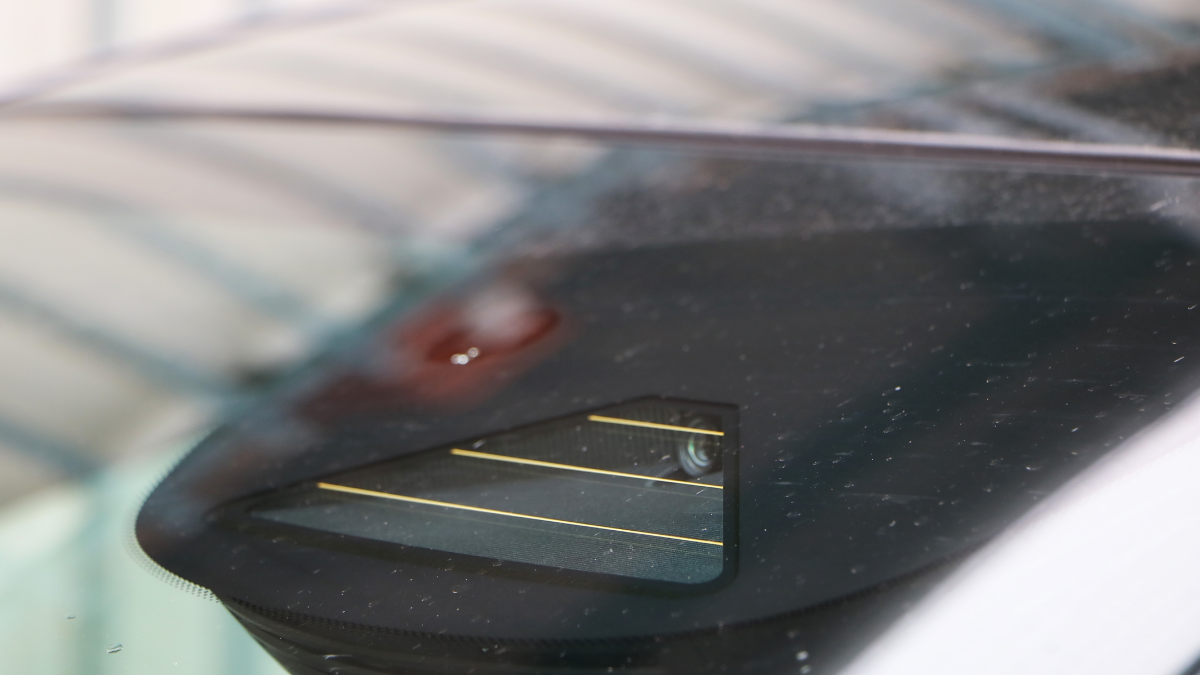
Think of it this way. The camera behind your windscreen judges distance and lane position based on where it expects the road to be. If that camera is sitting even a couple of millimetres out of place, or angled very slightly differently, every measurement it takes from that moment onwards will be wrong. The system has no way of knowing it is wrong. It simply carries on making decisions based on poor information.
Calibration resets those reference points using manufacturer-approved equipment, so your vehicle is measuring accurately once again.
How Does ADAS Technology Work?
ADAS relies on a network of components working together, each with its own job to do.
Cameras are usually mounted behind the windscreen near the rear-view mirror, and sometimes in the grille, wing mirrors or tailgate. These read lane markings, road signs, other vehicles and pedestrians.
Radar sensors typically sit behind the front bumper or grille, and often in the rear bumper for blind spot monitoring. Radar measures distance and closing speed, which is what allows adaptive cruise control to hold a safe gap.
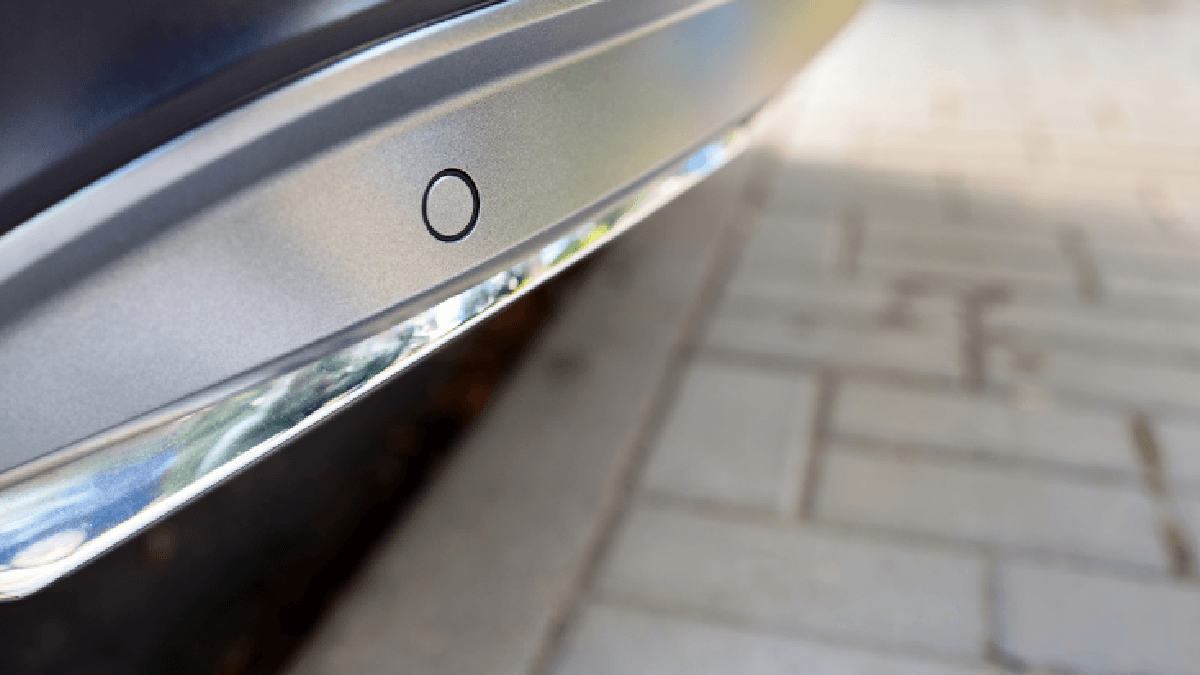
Ultrasonic sensors are the small round discs you can see in your bumpers, handling short-range detection for parking assistance.
Some vehicles also use LiDAR, which builds a detailed picture of the surroundings using laser pulses.
All of this information feeds into your vehicle’s control modules, which then decide whether to warn you, apply the brakes or add steering input.
These systems are tested rigorously long before a car reaches the showroom. Euro NCAP assesses driver assistance technology as part of its safety ratings, measuring how well features such as autonomous emergency braking perform in genuine accident scenarios. Those ratings assume the sensors are aligned exactly to specification, which is precisely what calibration restores after a repair.
Because so much of this equipment is fitted into bumpers, windscreens and body panels, it unfortunately sits exactly where accident damage tends to happen.
When Does A Vehicle Need Calibrating?
Calibration is needed far more often than most drivers expect. The most common reasons include:
- Windscreen replacement, where a camera is mounted to the glass
- Collision repair involving bumpers, grilles, wings or the tailgate
- Removal or replacement of any camera, radar or sensor
- Wheel alignment or tracking adjustments
- Suspension work or changes to ride height
- Body panel repairs near a sensor location
- Software updates affecting ADAS modules
Two of those tend to catch people out.
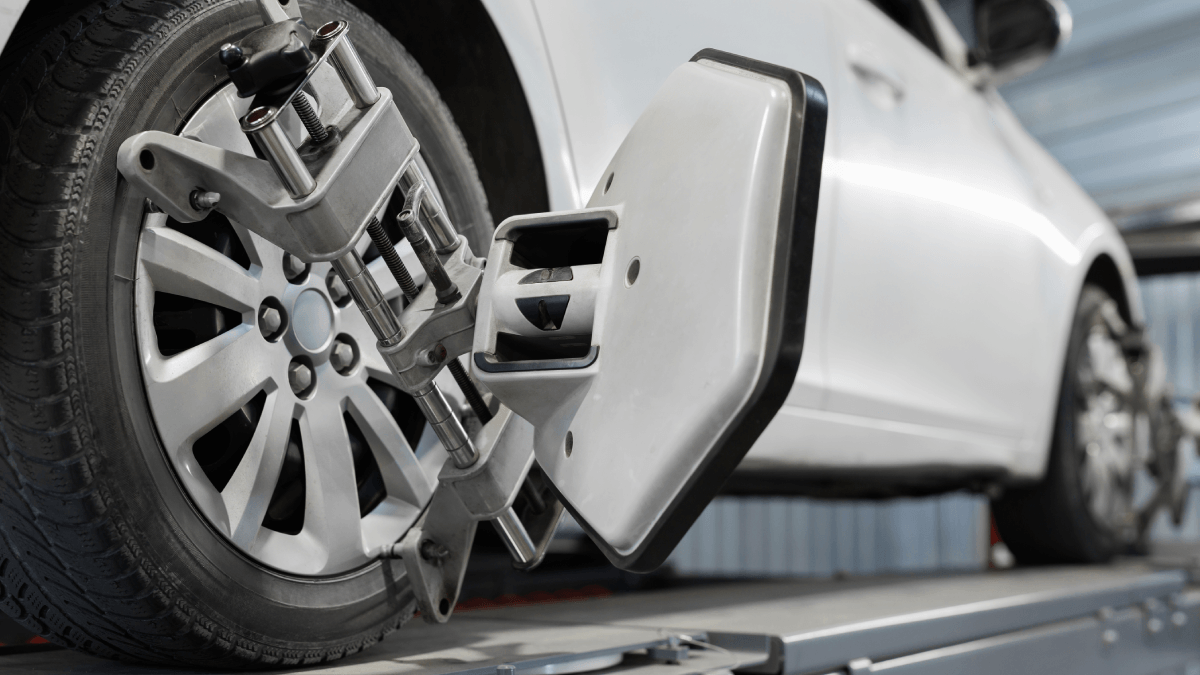
The first is wheel alignment. ADAS cameras are calibrated relative to your vehicle’s thrust line rather than the bodyshell, so adjusting the geometry moves the reference point the camera works from. This is exactly why our four-wheel alignment and calibration services so often go hand in hand.
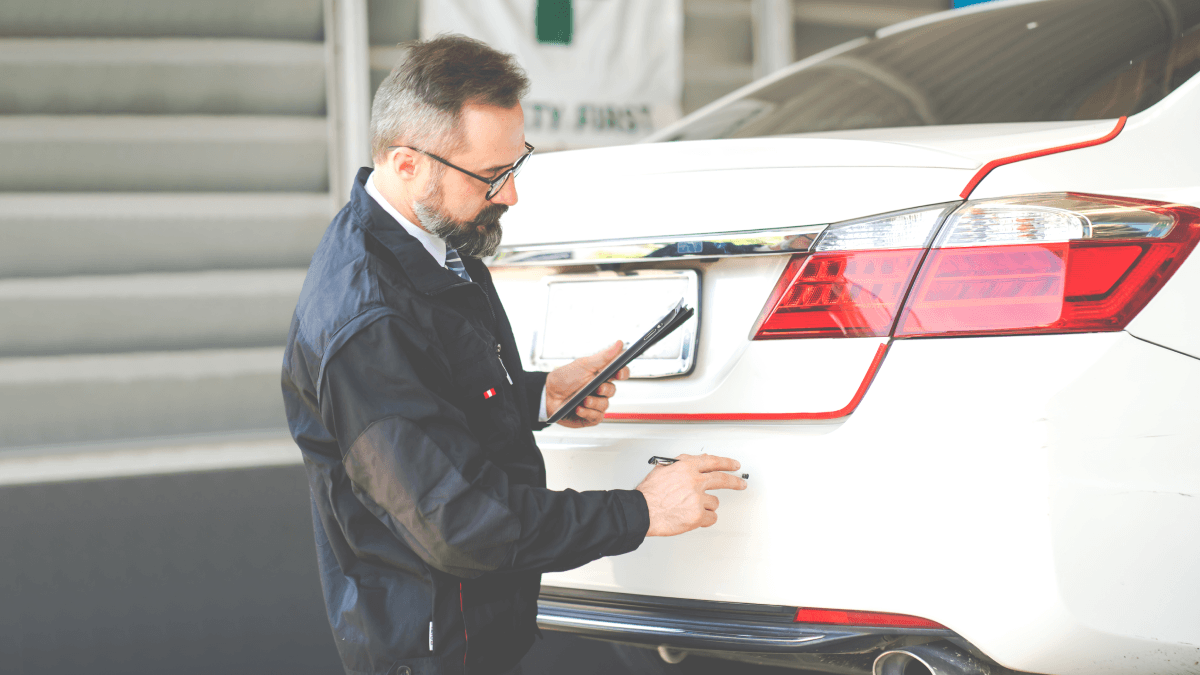
The second is minor damage. A low-speed knock that barely marks a bumper can still shift the radar sensor behind it by enough to matter. There is no warning light for a sensor that is working perfectly well but pointing slightly the wrong way, which is what makes it so worth checking.
If your vehicle has been repaired anywhere near a sensor, calibration should be part of the conversation. Our team includes an ADAS assessment as standard with our car body repairs in Milton Keynes, so nothing gets overlooked.
Will A Warning Light Tell Me If Calibration Is Needed?
Not reliably, no. A disconnected component will usually trigger a fault code, but a sensor that is connected and working while pointing slightly off-target often shows nothing at all on the dashboard. This is the main reason calibration is judged on what work has been carried out rather than on warning lights.
Can I Drive My Car Without ADAS Calibration?
Your vehicle will still drive, but its assistance systems may not behave the way they were designed to. That can mean false alerts, features failing to activate when you need them, or braking and steering interventions at the wrong moment. Following any repair that has disturbed a sensor, we would always recommend having it calibrated before returning the car to normal use.
There is no dedicated ADAS calibration check in the MOT at present, so it is worth knowing that a test pass does not confirm your systems are aligned correctly.
Do I Need ADAS Calibration After Windscreen Replacement?
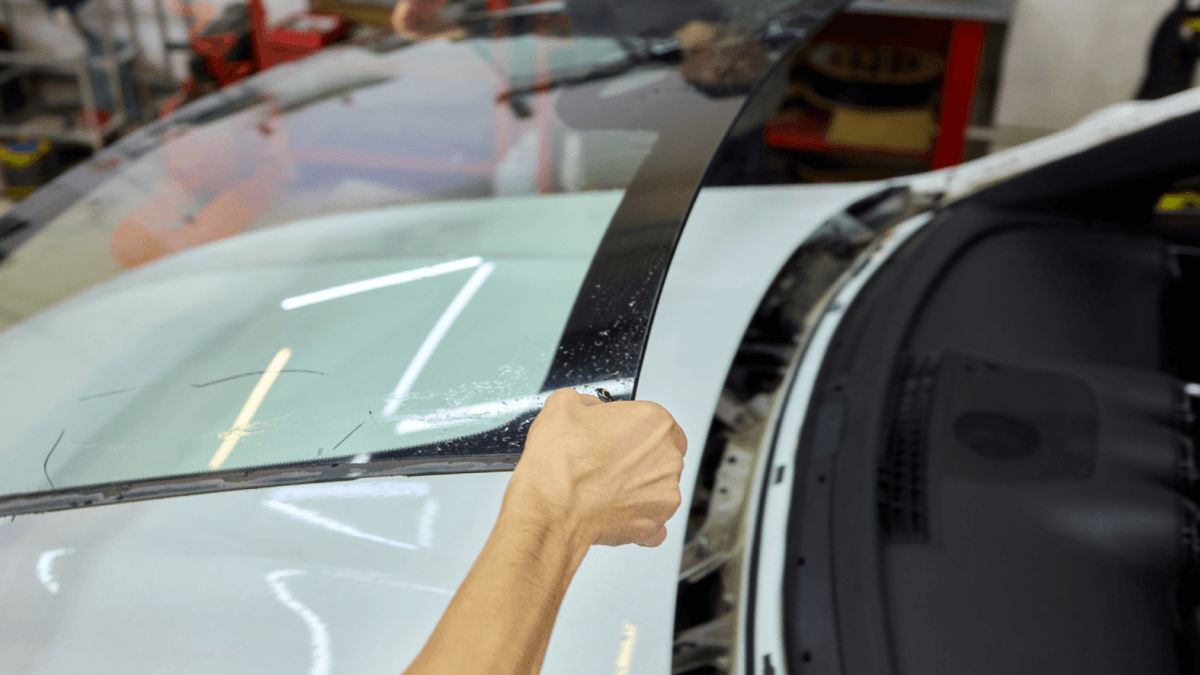
A lot of people ask us this one, and if your vehicle has a camera mounted to the windscreen, the answer is yes.
The forward-facing camera behind the glass is the single most important ADAS component on most cars. It handles lane keeping, traffic sign recognition and a significant part of autonomous emergency braking. When a windscreen is replaced, that camera has to be removed and refitted, and the new glass may differ very slightly in thickness, curvature or bracket position from the original.
A variation of a millimetre or two might sound trivial. Projected down the road ahead of you, it can move the system’s reference point by a considerable distance.
The industry guidance here is clear. The ADAS Glazing Code of Practice developed by Thatcham Research sets out that where sensors, or components close to them, are disturbed during a repair, calibration must be carried out to manufacturer tolerances.
Is ADAS Calibration Covered By Insurance?
In most cases where it forms part of an approved repair or a glass claim, yes. Arranging it privately outside of a claim generally cannot be reclaimed afterwards, so we would always recommend raising it with your insurer right at the start.
One question we hear regularly is whether a small chip repair needs calibration. Generally it does not, provided the camera and its bracket have not been disturbed. A full windscreen replacement almost always does.
Static And Dynamic Calibration
There are two methods, and which one your vehicle needs is decided by the manufacturer rather than the repairer.
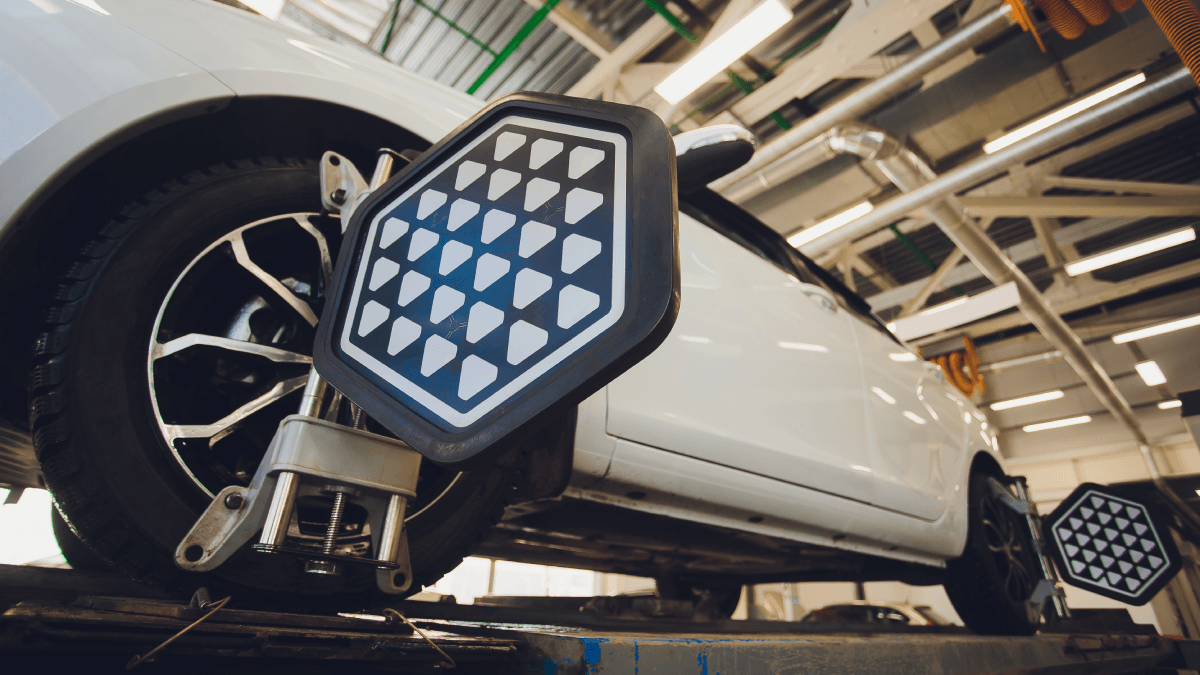
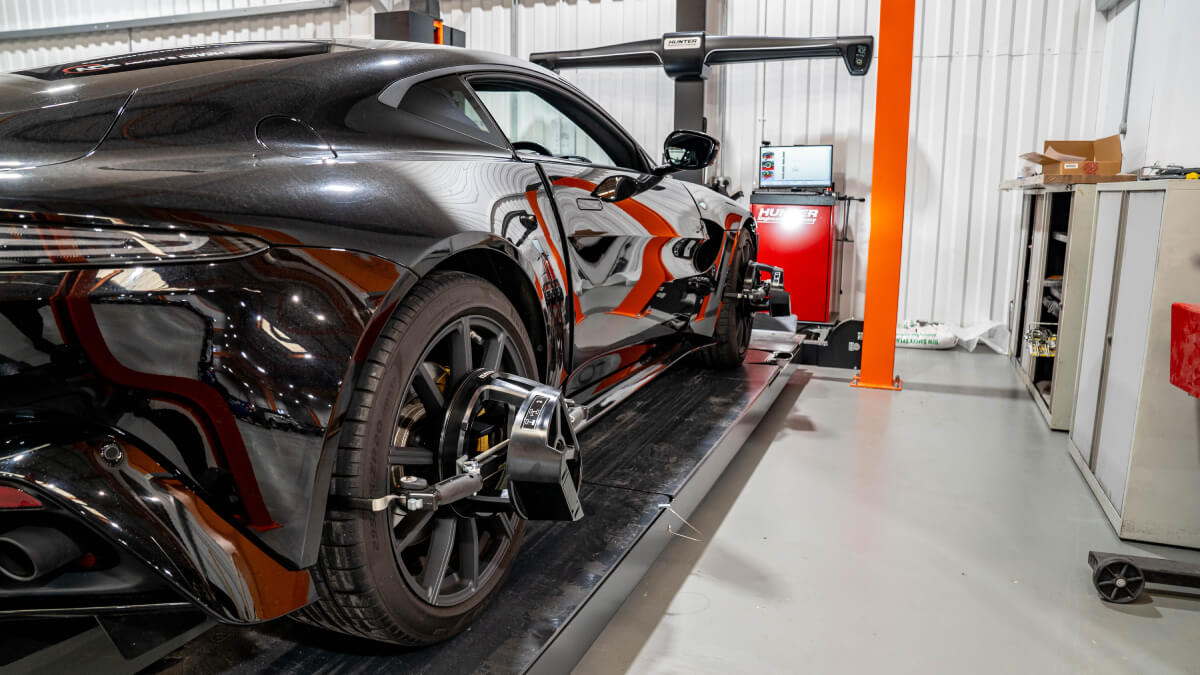
Static calibration takes place indoors in a controlled environment. Your vehicle is positioned on a level floor and precisely measured targets, which look like printed boards with specific patterns, are set at exact distances and angles in front of it. Diagnostic equipment then guides the system to recognise those targets and reset its reference points.
This needs a considerable amount of space, level flooring, controlled lighting and no reflective surfaces nearby, which is why it simply cannot be done properly on a driveway or in a general workshop.
Dynamic calibration is carried out on the road. With diagnostic equipment connected, the vehicle is driven at a specified speed on roads with clear lane markings, allowing the system to learn from live conditions. Requirements vary between manufacturers, but many specify good visibility, dry weather and a sustained speed.
Some vehicles need both. Certain Volvo, Land Rover and Vauxhall models require a static procedure followed by a dynamic one before the calibration is complete.
Can Any Garage Carry Out ADAS Calibration?
Unfortunately not. It requires manufacturer-specific procedures, calibrated targets, diagnostic software and, for static calibration, a properly sized and prepared workshop space. A workshop without the equipment for static calibration cannot simply substitute a road test instead, because the correct procedure is set by your vehicle’s specification.
We would always recommend checking that your repairer carries out calibration to manufacturer standards and provides documentation confirming it has been completed.
How Long Does ADAS Calibration Take?
For most vehicles, the calibration itself takes somewhere between one and three hours.
A straightforward single-camera static calibration on a common model can often be completed within the hour. Vehicles with several systems requiring both static and dynamic procedures will take considerably longer, and dynamic calibration adds road time on top of that.
A few things influence the timescale:
- How many systems need calibrating – a car with a front camera, front radar, rear radar and surround-view cameras will take far longer than one with a single forward camera.
- The manufacturer’s specified procedure – some procedures are much more involved than others.
- Whether both static and dynamic steps are required.
- Weather and road conditions – these can hold up dynamic calibration.
- Any existing faults – these may be picked up during the initial diagnostic scan.
Where calibration forms part of a larger accident repair, we carry it out at the end of the process, once panels, glass and geometry are all back to specification. Calibrating before the physical repair is finished would simply mean doing the job twice.
At Vehicle Crash Repairs, calibration is built into the repair schedule from the outset rather than treated as an afterthought, so it will not add unexpected days onto your booking. Whether you need dented panel repairs in Milton Keynes or a more substantial accident repair, our team will confirm at estimate stage whether calibration is required and factor it into your timescale.
Calibration You Can Trust
ADAS technology has made modern cars considerably safer, but it has also raised the bar for what a proper repair involves. Returning a vehicle that simply looks right is no longer enough if the systems designed to protect the people inside it are reading the road incorrectly.
That is why calibration is not an optional extra for us. It is part of returning your vehicle to manufacturer standard, and it is fully documented so you have evidence the work has been completed correctly.
Vehicle Crash Repairs has been looking after drivers in Milton Keynes since 2011, and our technicians are ATA-qualified and NVQ-accredited. As an insurance-approved repair centre, we work directly with all the major insurers, and it is worth remembering that you are entitled to choose us as your repairer regardless of who your insurance company suggests.
Whether you need car body repairs in Milton Keynes following an accident, or you have been told your vehicle needs calibrating after a windscreen replacement, our ADAS calibration service will get your safety systems back to exactly where they should be.
Please feel free to speak with our team about what your vehicle needs, and we will be happy to talk you through it.